The Things That Hide in Plain Sight
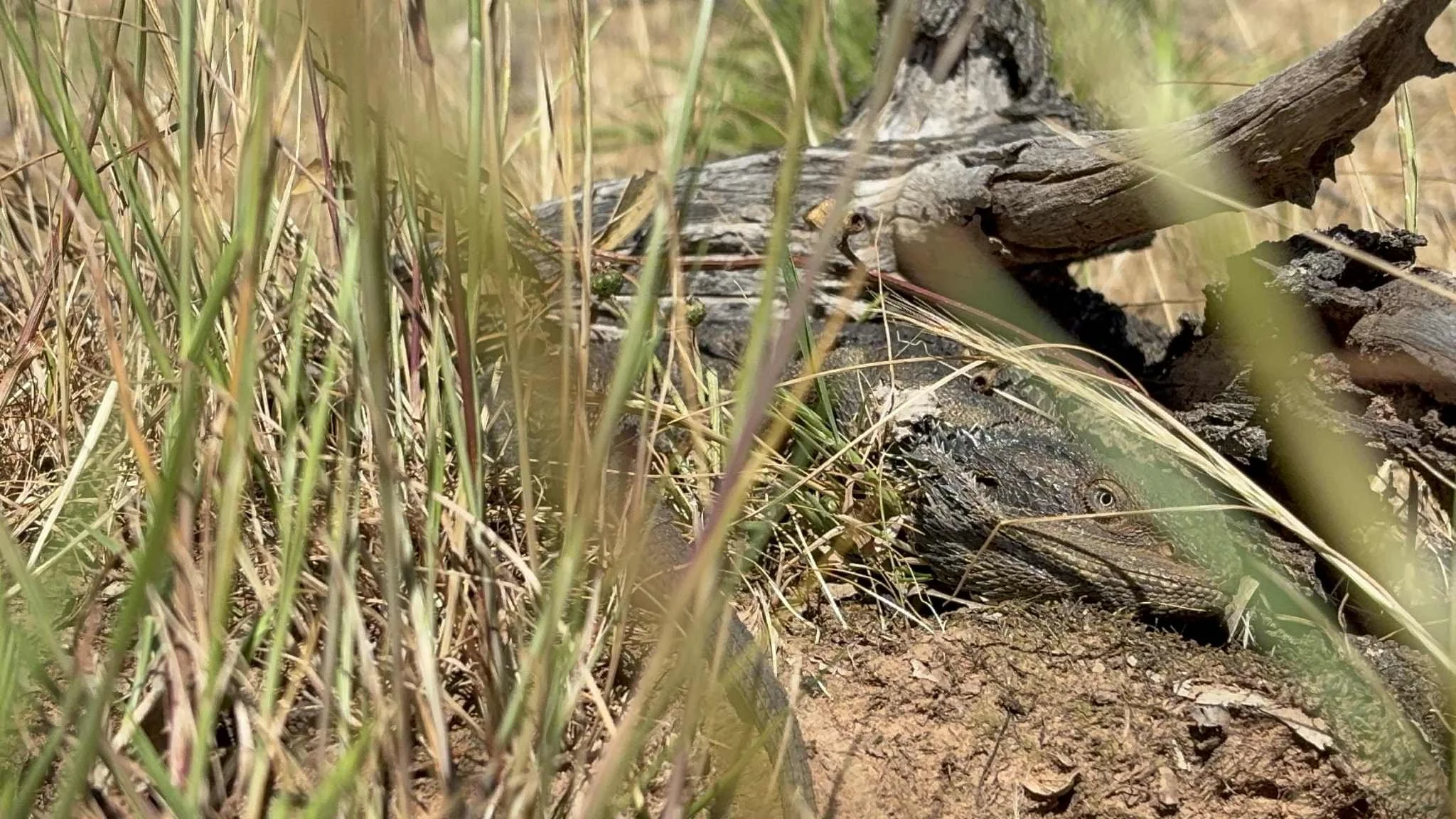
On a (almost secret) dirt road so rarely used it’s more animal corridor than track, you learn to scan. Rabbits bolt, sheep stare, bull ants cascade over your shoes if you stop too long, flies make a helmet of sound, and sometimes a fox ghosts across the paddock. Today there was something “else.” My Labradoodle froze - ears forward, breath held. I assumed brown snake - the one that really matters. Only after a long, patient look did the outline resolve: a goanna, perfectly camouflaged among sticks and earth. The giveaway was a tail that read as “snake” to my nervous system.
Nature is good at hiding.
So are we.
Our brains are prediction engines. We don’t passively “see”; we test hypotheses against noise. Under uncertainty, the brain leans on priors - what usually lurks under long-dead branches on a hot, quiet, unfrequented road? So my first perception was a story about snake-like danger, not a photograph of reality. The Labradoodle - a cross between one dog bred for retrieving game, another used for waterfowl hunting - functioned like a second nervous system, an external alarm that widened my model of the moment. In cognitive science this is distributed attention - sometimes we borrow each other’s perception to update our own.
The obvious problems - stress, conflict, low mood - are like the rustle in the grass. We assume “snake.” Then we look longer. With enough safety and stillness, contour emerges: the anger that is actually grief, the avoidance that is unspoken shame, the perfectionism that is a clever strategy to control uncertainty.
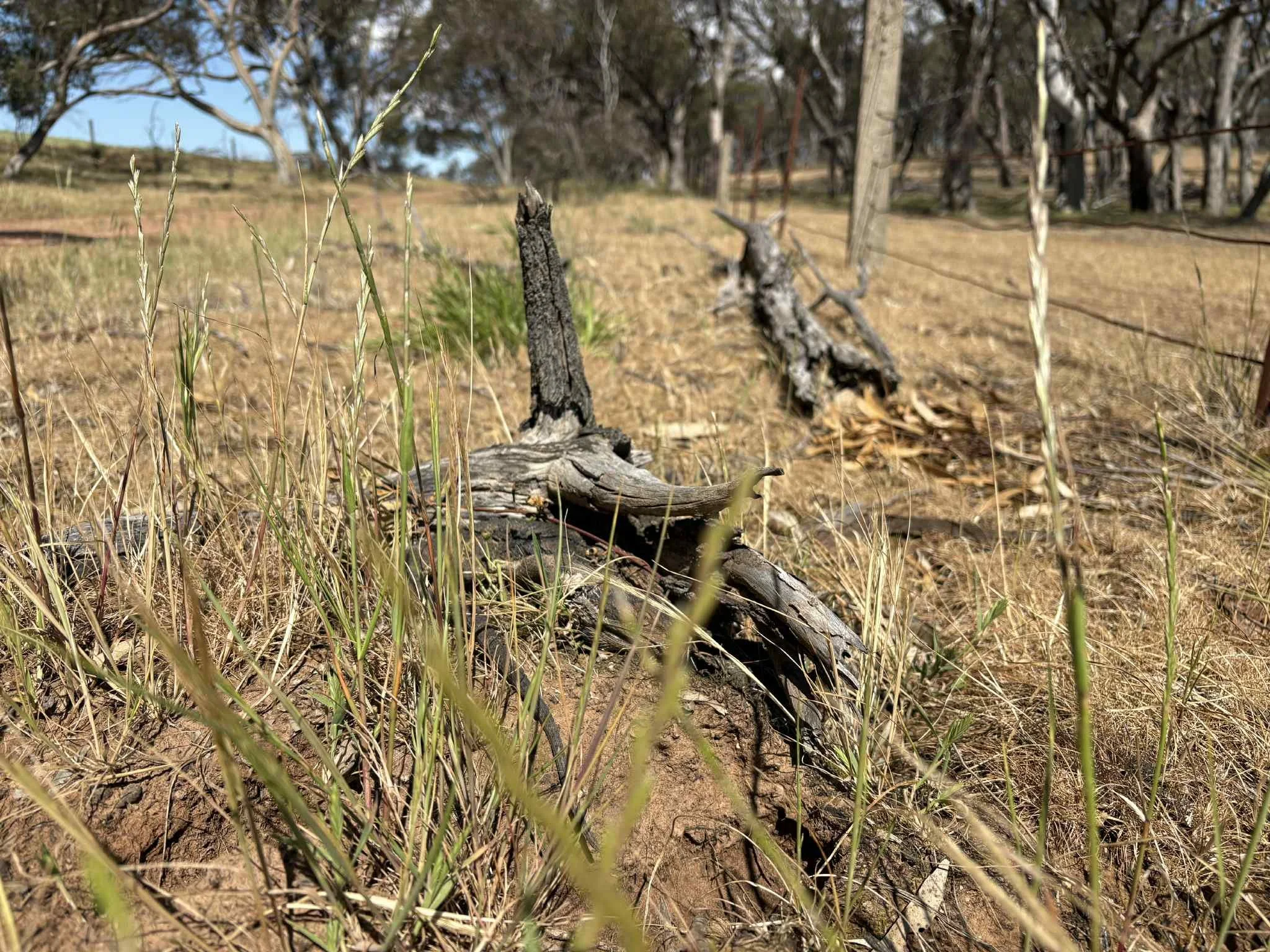
What looked like threat may prove to be a part of us built for survival - camouflaged because it had to be.
Camouflage works both ways. We miss what blends in (old patterns we call “just how I am”), and we mislabel what moves (new feelings we call “bad”). The job is not to attack the hidden thing but to disentangle signal from story. That takes three practices I was reminded of by a goanna on that road:
Pause long enough for resolution. Vision - and insight - need time. Quick scans keep you alive; slow looks help you live.
Borrow steadiness. Like the dog’s unmistakable stillness, another mind helps us see what ours is primed to miss. Shared attention is not a nicety; it’s a technology.
Update the map. Once seen accurately, the “threat” can be navigated. You don’t have to fight the goanna; it's enough just to know that it's a goanna.
The more you walk a track, the more it can feel different. This one's not suddenly safer exactly, but it's more true. The world hasn’t changed - my model has. That can sometimes be the quiet miracle of therapy; reality stays reality, yet it becomes more workable.
Gradient Counselling Barossa offers a place to pause, look longer, update the map. What's your snake - er - goanna? Add a comment, I’d love to hear your thoughts - Andrew. #gradientcounselling #counselling #psychology